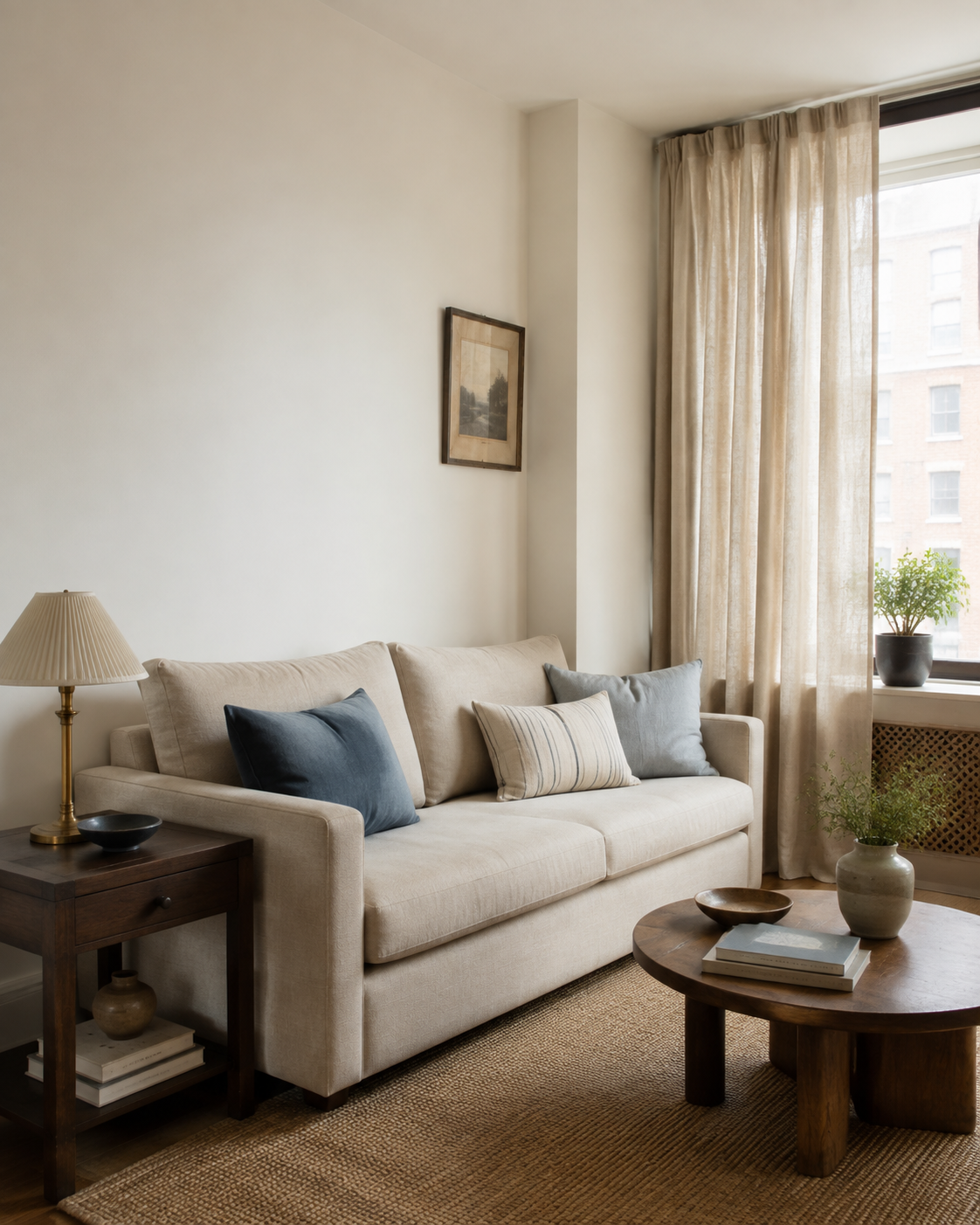
A room rarely looks expensive because every object in it was expensive. It looks considered because the proportions make sense, the materials repeat, and there is somewhere for the eye to rest.
In a small apartment, these decisions matter even more. You see several zones at once, so one awkward scale or harsh light source can affect the whole room. The ideas below focus on changes that are renter-friendly, easy to reverse, and useful beyond a single trend.
1. Start with one visual anchor
Choose the first thing you want the eye to notice: a framed print, a generous lamp, a dark wood side table, or a textured headboard. Let nearby objects support it instead of competing with it.
One medium-to-large anchor usually reads more confidently than several small decorative objects. It also reduces the feeling that the room was furnished from a collection of unrelated bargains.
2. Repeat two materials across the room
Repetition creates order. If you already have dark wood and aged brass, echo each material two or three times in small ways: a frame, lamp base, tray, or cabinet handle.
The pieces do not need to match exactly. A family resemblance is enough, and slight variation keeps the result from looking like a furniture set.
3. Upgrade the light before the furniture
A single overhead fixture tends to flatten color and exaggerate every practical surface. Add one lamp near seated eye level and another lower glow near a shelf or corner.
Warm, shaded light gives inexpensive materials more depth. It also lets you create different moods without buying or storing more decor.
4. Give curtains a longer line
When possible, hang curtain panels above the window and let them fall close to the floor. The longer vertical line makes the wall feel more deliberate and the window less visually chopped up.
Choose a fabric with a matte texture rather than a high shine. Linen-look panels, soft cotton blends, and subtle weaves photograph well and are forgiving in everyday use.
5. Hide the most ordinary visual noise
Chargers, tissue packs, remote controls, and half-used supplies are often what make a compact room feel unsettled. Closed boxes, a small lidded basket, or one drawer near the point of use can have more impact than new decoration.
The goal is not an empty home. It is to keep the practical layer easy to reach while allowing the visible layer to feel intentional.
Before you buy anything
Quick room check
- One clear focal point per visible zone
- Two repeating materials rather than many unrelated finishes
- At least two light sources at different heights
- Fewer, larger accents instead of many tiny ones
- A closed home for everyday visual clutter
Begin with lighting and visual noise before buying more furniture. Those two changes often reveal that the room needs less than you thought.